Qualify for a grant to improve your home

Warmer Homes Scotland

If you’re struggling to heat your home, or your energy bills have become hard to manage, there’s help available. Warmer Homes Scotland is the Scottish Government’s programme for households in or at risk of fuel poverty. Eligible homeowners and private tenants can get heating and insulation improvements, usually at no cost at all.

Eligibility is means-tested. It’s linked to certain benefits, being 75 or over with no working heating, or a health condition made worse by a cold home. This is different from the Home Energy Scotland grant scheme, which is property-based and doesn’t look at income.

To check if you qualify, contact Home Energy Scotland on 0808 808 2282. They’re the single gateway to the scheme.

NK Heating Solutions is a PAS2030, TrustMark and MCS registered installer, delivering government-funded heating and insulation work across Perth and Perthshire.

What Warmer Homes Scotland Covers

Warmer Homes Scotland is the Scottish Government’s national fuel poverty scheme. It’s funded by the Scottish Government and delivered by Warmworks. It’s been running since 2015 and has now helped over 50,000 households across Scotland. Support can be worth £10,000 or more.

The work it covers includes loft insulation, cavity wall insulation, solid wall insulation (internal and external), room-in-roof insulation, and heating system upgrades such as heat pumps, high heat retention storage heaters, or boilers where a heat pump isn’t technically suitable.

For eligible households, the work is usually fully funded, at no cost to the homeowner. In rare cases where a contribution is needed, an interest-free loan is available.

Warmworks manages the whole process end to end once a household is referred. That includes a home survey, confirming eligibility, the installation itself, and a final quality inspection. It starts with a call to Home Energy Scotland.

How this differs from the Home Energy Scotland grant and loan scheme: Warmer Homes Scotland is means-tested and usually fully funded. The Home Energy Scotland grant and loan scheme is property-based, not means-tested, and covers a portion of the cost, with grants up to £7,500. Both are accessed through Home Energy Scotland, but they’re different schemes with different eligibility.

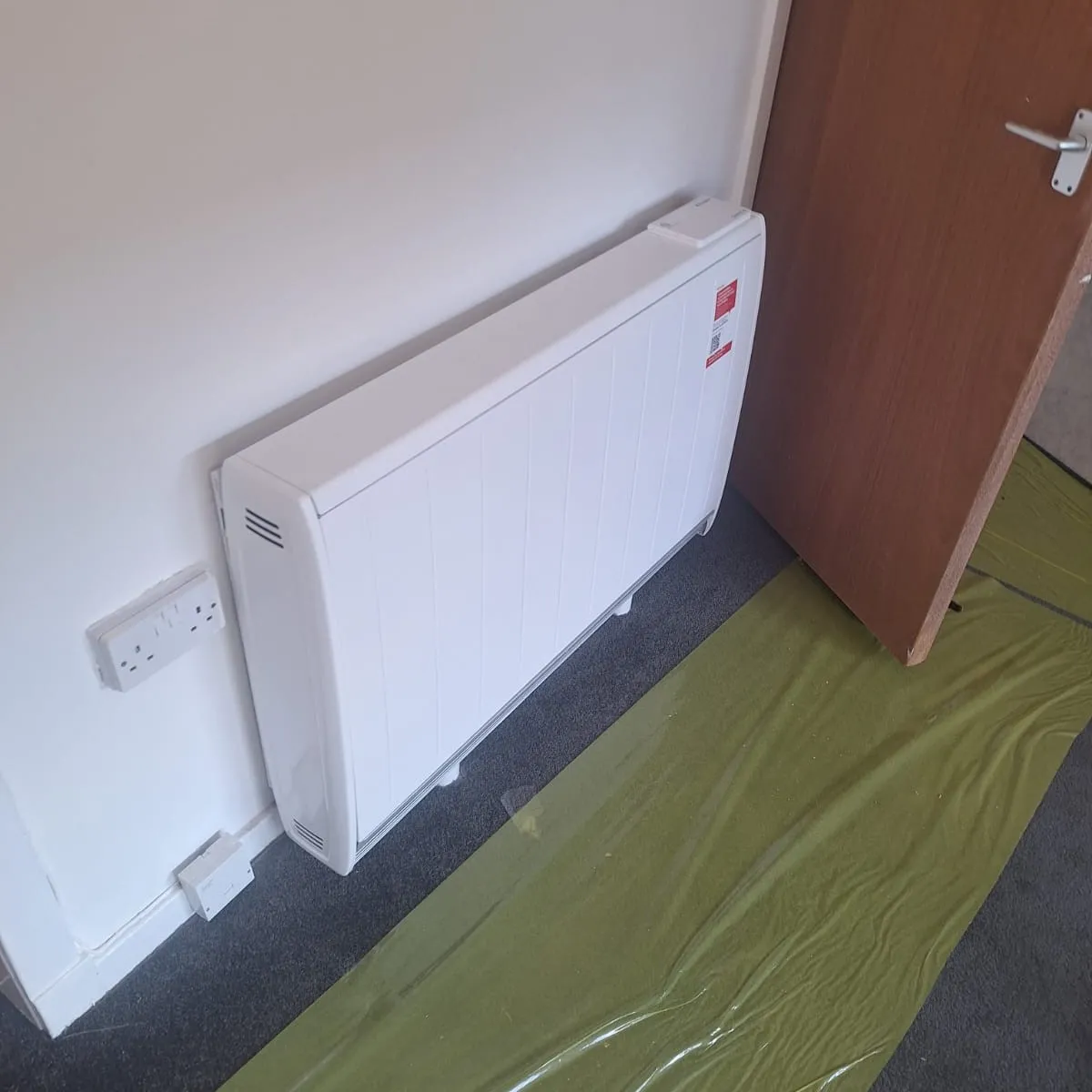
Wall mounted electric storage high heat retention system
Dimplex Logo
NIBE
Samsung
Mitsubishi
Alpha
worcester
ideal
get a free quote from NK Heating Solutions

Get a Free Quote in 2 Minutes

Who Qualifies for Warmer Homes Scotland

At least one of these needs to apply to you:

You receive a qualifying benefit, such as Pension Credit, Universal Credit, income-based Jobseeker’s Allowance, income-related Employment and Support Allowance, or Child Tax Credit. You’re 75 or over and don’t have working heating. You’re living with a disability or a long-term health condition that’s made worse by a cold home.

And your property needs to meet these criteria:

An EPC energy rating of 64 or lower (band D to G). A floor area under 230 square metres. Council tax band A to G. You’ve lived in the home for at least 6 months. You haven’t received Warmer Homes Scotland or HEEPS:ABS support in the last 5 years. You’re a homeowner or private tenant, not a council or housing association tenant.

Eligibility criteria can change, so it’s worth checking the current requirements directly with Home Energy Scotland. Completing an initial assessment doesn’t guarantee your application will succeed, and support is subject to Scottish Government funding availability.

If you don’t qualify, the Home Energy Scotland grant and loan scheme may be worth a look instead. It’s property-based rather than means-tested, so many Perth homeowners who don’t qualify for Warmer Homes Scotland can still access funding through it.

Air source heat pump cylinder installed in a Perth home

Trusted by People Across Perth

Read what our customers say about our work, in their own words.

Call Us Now for a Free Quote and Survey

NK Heating Solutions Team Standing Infront of their Vans and Workplace

How NK Heating Solutions Can Help

If you qualify for Warmer Homes Scotland, the next step is a call to Home Energy Scotland on 0808 808 2282 to start the process. Warmworks and their network of installers carry out the assessment and the work.

If you don’t qualify, NK Heating Solutions can help through the Home Energy Scotland grant and loan scheme instead. That route is property-based, not means-tested, with grants up to £7,500 for heat pumps and insulation. NK Heating Solutions supports the application and carries out the installation as an accredited installer.

NK Heating Solutions is PAS2030 (held since 2021), TrustMark and MCS registered. These are the accreditations required for government-funded heating and insulation work. On government-funded work NK Heating Solutions installs directly, a Qualitymark insurance-backed guarantee applies: 25-year system cover and 2-year workmanship cover.

NK Heating Solutions is based in Perth, covering Perth and Perthshire, and holds public liability, employers’ liability and professional indemnity insurance.

What we provide for our customers:

Eligibility Check Before You Commit

 Funding Is Property Based, Not Means Tested

 PAS2030 Certified for Government Funded Work

 Trustmark Registered and Independently Audited

Extra Funding for Rural and Island Homes

One Team for Assessment, Funding and Installation

 30 Years Gas Safe and NICEIC Registered

Perth-based, Not a National Call Centre

FAQs

Am I eligible for the Warmer Homes Scotland scheme?

Eligibility is means-tested. You’ll usually need to be receiving a qualifying benefit, be 75 or over with no working heating, or have a health condition made worse by a cold home. Your property also needs to meet certain criteria, including an EPC rating of band D to G, a floor area under 230 square metres, and council tax band A to G. Contact Home Energy Scotland on 0808 808 2282 to check. Criteria can change, so it’s worth confirming the current requirements directly.

Is Warmer Homes Scotland free?

In most cases, yes. The work is usually fully funded for eligible households. If a contribution is needed, an interest-free loan is available to cover it. Support through the scheme can be worth £10,000 or more.

What's the difference between Warmer Homes Scotland and Home Energy Scotland grants?

They’re two different schemes, both accessed through Home Energy Scotland. Warmer Homes Scotland is means-tested and usually fully funded, for households in or at risk of fuel poverty. The Home Energy Scotland grant and loan scheme is property-based, not means-tested, with grants up to £7,500 plus interest-free loans, open to any homeowner whose property qualifies.

How do I apply for Warmer Homes Scotland?

Contact Home Energy Scotland on 0808 808 2282 (free, Monday to Friday 8am to 8pm, Saturday 9am to 5pm). They’ll check your eligibility and refer you to Warmworks, who manage the survey, installation and inspection. You can also complete the self-assessment on the Home Energy Scotland website.

Can I get Warmer Homes Scotland if I rent?

Private tenants can apply, with the landlord’s agreement. Council or housing association tenants aren’t eligible through this route and should contact their landlord directly about energy efficiency improvements.

What if I don't qualify for Warmer Homes Scotland?

The Home Energy Scotland grant and loan scheme may be worth looking at instead. It’s property-based rather than means-tested, with grants up to £7,500 for heat pumps and insulation. NK Heating Solutions is an accredited installer for HES-funded work and can support the application.

No Obligation | Safe & Private | Takes 1 Min

Energy Saving Trust Logo

Save up to £420* on your energy bill annually by upgrading to a modern, efficient boiler.

*Figure from the Energy Saving Trust, based on replacing a G-rated boiler with no heating controls with a new A-rated condensing boiler fitted with a programmer, room thermostat and thermostatic radiator valves (TRVs), in a gas-heated home in Great Britain. Savings will vary depending on the size and thermal performance of your home.

Figures reflect the Energy Saving Trust's estimates as published May 2026.