Qualify for a grant to improve your home

Landlord EICR Perth

You’ve been told you need an “electrical certificate” — but it’s not always clear what that means, what’s involved, or how often you need one. Or your letting agent’s flagged that your EICR has expired and the property can’t be marketed without a new one.

An EICR — Electrical Installation Condition Report — is a safety inspection of the fixed wiring in a rental property. It checks everything behind the walls: the wiring, the consumer unit, sockets, light fittings and earthing. It’s not the same as PAT testing, which covers portable appliances and is a separate check.

You get a formal report with clear outcome codes confirming the installation is safe. If issues are found, NK Heating Solutions can carry out the remedial work and re-inspect.

NICEIC registered — 30 years. 18th Edition qualified electricians.

What an EICR covers

An EICR looks at the fixed electrical installation in the property, not the appliances plugged into it.

What’s checked
The wiring behind the walls and under the floors. The consumer unit (fuse board) — is it up to current standards? Sockets and switches, checked for correct wiring, earthing and safe condition. Light fittings and ceiling roses. Earthing and bonding — the safety net that stops electric shock.

What it doesn’t cover
Portable appliances — kettles, microwaves, lamps in furnished lets. That’s PAT testing, a separate inspection. It’s a common mix-up, so worth being clear: if it plugs in and can be unplugged, it’s not part of the EICR.

What happens during the inspection
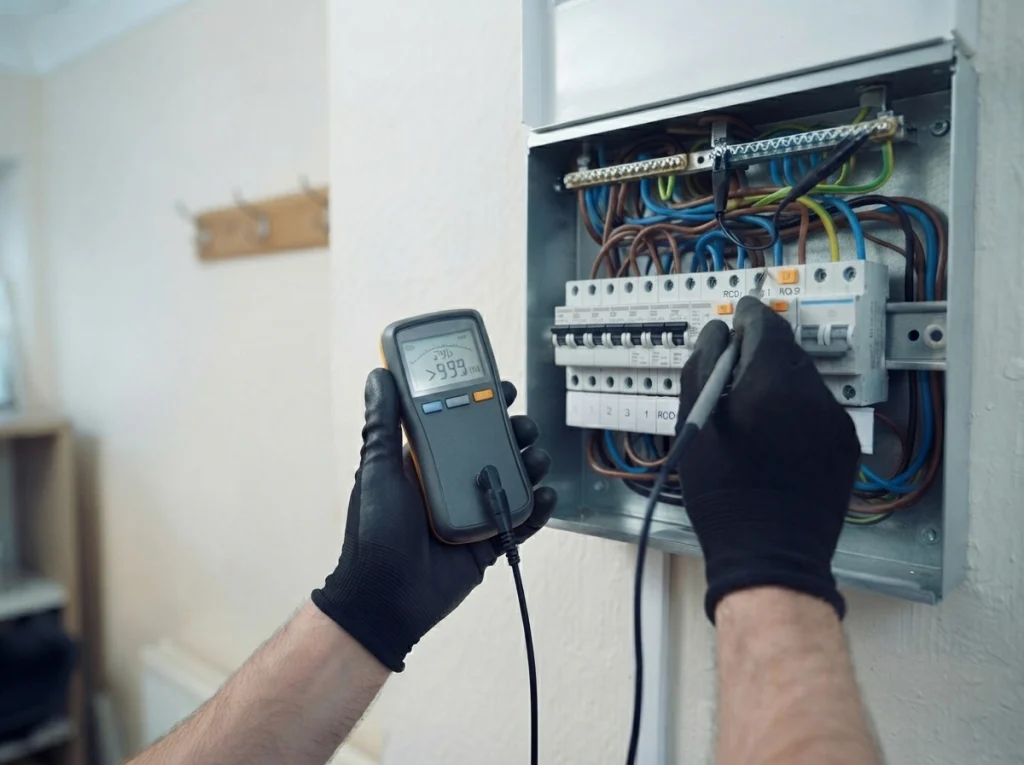
We work through the property room by room, testing each circuit. Some sockets and switches are opened to inspect the wiring behind them, and the consumer unit is tested and inspected. A standard rental property typically takes 2 to 4 hours, depending on size and the number of circuits.

The outcome codes
C1 — danger present. An immediate risk. The circuit or installation must be made safe before the property can be occupied.
C2 — potentially dangerous. Not immediately dangerous, but needs urgent attention. Remedial work required before the property can be let.
C3 — improvement recommended. Advisory. The installation is safe, but there’s room to improve it. No obligation.
Satisfactory. Everything checks out and the EICR is valid.

If C1 or C2 issues come up, NK Heating Solutions can carry out the remedial work and re-inspect — one contractor, no need to bring in a second electrician.

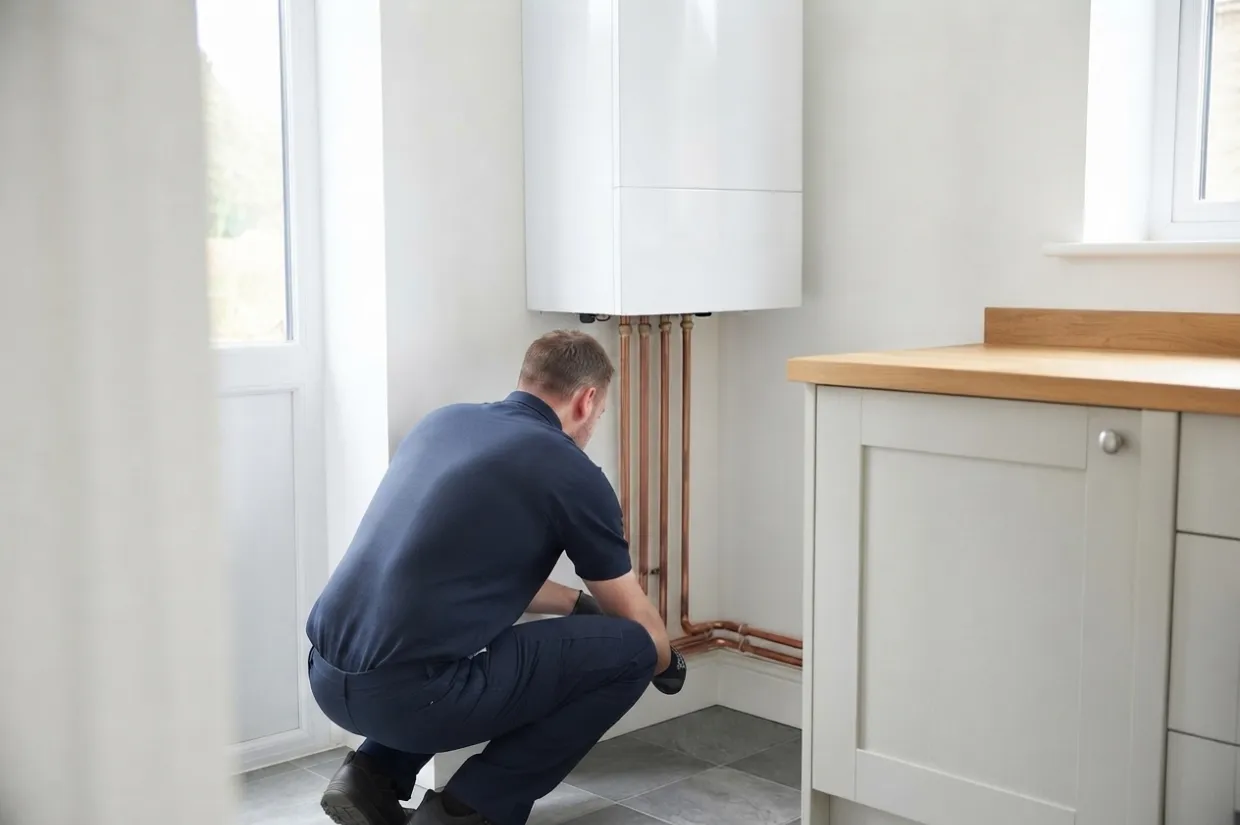
Home heating engineer at work on a domestic heating system in Perth
Dimplex Logo
NIBE
Samsung
Mitsubishi
Alpha
worcester
ideal
get a free quote from NK Heating Solutions

Get a Free Quote in 2 Minutes

EICR requirements for landlords

As a landlord in Scotland, you’re required to keep the electrical installation in a rental property safe and in proper working order, under the Repairing Standard. An EICR is the standard way to demonstrate that.

When you need one
At the start of a new tenancy. At regular intervals — check the current interval for your property, as Scotland’s requirement can differ from other UK guidance you might come across. After any significant electrical work. If the property’s use or occupancy changes.

What happens with the report
Keep the EICR on file, and have a copy available for tenants and letting agents. If issues are found (C1 or C2), remedial work has to be completed and evidenced before the property is let.

If you don’t comply
The property may fall short of the Repairing Standard. That can mean you’re unable to let it, enforcement action from the local authority, or complications with your insurance.

Scotland’s EICR requirements sit under different legislation from England and Wales — the Repairing Standard is Scotland-specific, so it’s worth checking your obligations rather than assuming the England timeline applies here.

Home heating engineer at work on a domestic heating system in Perth

Trusted by People Across Perth

Read what our customers say about our work, in their own words.

Call Us Now for a Free Quote and Survey

NK Heating Solutions Team Standing Infront of their Vans and Workplace

Why choose NK Heating Solutions for your EICR

NICEIC registered — 30 years. The longest-standing electrical accreditation in the Perth area.

18th Edition qualified. Current wiring regulations — the standard your EICR is assessed against.

GasSafe registered — 30 years. Useful if you also need a gas safety certificate.

BPEC accredited — 30 years in plumbing and heating.

80+ years of combined trade experience across the team.

Caledonia Housing contract — around 300 properties maintained, now in our fifth year. Electrical compliance across a large housing-association portfolio.

Remedial work in-house. If your EICR flags C1 or C2 issues, we can do the repair and re-inspect — no chasing a second electrician. One contractor from inspection to sign-off.

Fast turnaround. Short-notice bookings for landlords and letting agents with urgent requirements.

Fully insured: public liability, employers’ liability and professional indemnity.

Perth-based, with City Centre rental stock at the core of our patch.

An EICR is just one part of what a rental property needs covered. NK Heating Solutions also handles gas safety, legionella and EPC certificates — every certificate a landlord needs, from one company.

What we provide for our customers:

Gas Safety, EICR, PAT, Legionella and EPC in One Place

Fifth Year Maintaining 300+ Caledonia Homes

30 Years Gas Safe and NICEIC Registered

18th Edition Qualified Electricians

Support Meeting Your EPC Obligations

20 Years HIES Registered

 Living Wage Employer and Trustmark Registered

Perth Based, Not a National Call Centre

FAQs

What are the EICR requirements for landlords?

As a landlord in Scotland, you need to keep the fixed electrical installation safe and meeting the Repairing Standard. An EICR is the standard inspection for demonstrating that. It’s required at the start of a new tenancy and at regular intervals, and has to be carried out by a qualified electrician — NK Heating Solutions is NICEIC registered and 18th Edition qualified. If the report shows C1 or C2 codes, remedial work is required before the property can be let.

Is an EICR a legal requirement?

Yes. In Scotland, the Repairing Standard requires landlords to keep the electrical installation in proper working order, and an EICR is the recognised way to show that. Not complying can mean enforcement action, and may stop you letting the property legally.

Do I need a new EICR for a new tenant?

An EICR should be in place at the start of a new tenancy. If your current one is recent and satisfactory, it may still be valid — but many landlords and letting agents get a fresh one for each new let to be safe. Check the date and outcome codes on your existing report, and we can advise if you’re not sure.

What's the difference between an EICR and PAT testing?

An EICR inspects the fixed electrical installation — the wiring, consumer unit, sockets, switches and earthing. PAT testing checks portable appliances instead — kettles, lamps, microwaves in furnished lets. They’re separate inspections, and most landlords need an EICR rather than PAT testing unless the property is let furnished.

How long does an EICR take?

Typically 2 to 4 hours for a standard rental property, depending on the number of rooms and circuits. We need access to every room, the consumer unit, and the loft space if wiring runs through it.

What happens if my EICR fails?

An EICR doesn’t “fail” the way a gas safety check does — it gives outcome codes instead. C1 (danger) and C2 (potentially dangerous) mean remedial work is needed before the property can be let. C3 is advisory — recommended, not mandatory. NK Heating Solutions can carry out the remedial electrical work and re-inspect, so the whole process stays with one contractor.

How much does an EICR cost?

It depends on the property’s size and the number of circuits, so we’ll give you a clear quote before any work starts.

No Obligation | Safe & Private | Takes 1 Min

Energy Saving Trust Logo

Save up to £420* on your energy bill annually by upgrading to a modern, efficient boiler.

*Figure from the Energy Saving Trust, based on replacing a G-rated boiler with no heating controls with a new A-rated condensing boiler fitted with a programmer, room thermostat and thermostatic radiator valves (TRVs), in a gas-heated home in Great Britain. Savings will vary depending on the size and thermal performance of your home.

Figures reflect the Energy Saving Trust's estimates as published May 2026.